
When markets crash, it’s natural to panic.
But if you own an S&P 500 ETF, selling during a downturn may actually hurt your long-term returns.
In this guide, let’s break down why holding onto your S&P 500 ETF in a crisis can be the smartest move for beginner investors.
📌 What Is the S&P 500 ETF?
- S&P 500 Index: Tracks 500 of the largest U.S. companies
👉 Buying an S&P 500 ETF means you’re betting on the long-term growth of the U.S. economy, not just a single company.
📉 Why Hold Through a Market Crash?
1️⃣ Markets Have Always Recovered
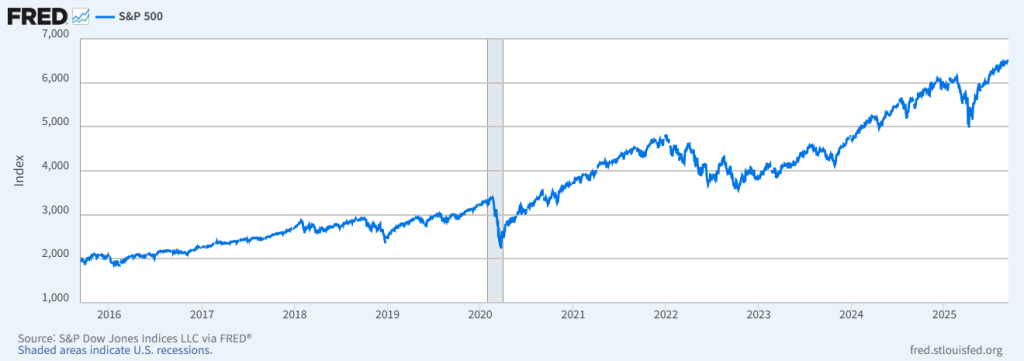
- From the Great Depression, the 2000 dot-com bubble, 2008 financial crisis, and 2020 COVID crash—the S&P 500 has always bounced back.
- Why? Because U.S. companies keep innovating, and the index evolves as new leaders replace weaker ones.
2️⃣ Individual Companies Fail, but the Index Survives
- A single company might go bankrupt in a crisis.
- But the S&P 500 constantly removes weak firms and adds strong ones.
- Example: GM was replaced by Tesla.
👉 The index represents the winners of the U.S. economy.
- Example: GM was replaced by Tesla.
3️⃣ Selling in Panic Locks in Losses
- If you sell after a 30% drop, your losses become permanent.
- By holding, you give your portfolio a chance to recover as the market rebounds.
“The biggest mistake beginners make is selling in fear and missing the recovery.”
4️⃣ Crises Are Hidden Opportunities
- Market crashes = cheaper buying prices.
- Investors who buy or hold during downturns often gain the most when recovery comes.
- Example:
- 2008 crash → long-term buyers saw massive gains
- 2020 COVID crash → the S&P 500 rebounded nearly 60% within a year
🧠 Beginner Investor Tips
✔ Don’t time the market
No one knows the exact bottom. Staying invested beats trying to guess.
✔ Use dollar-cost averaging (DCA)
Buying regularly means you’ll naturally pick up more shares when prices are low.
✔ Trust the long-term data
For over 100 years, the S&P 500 has gone through crises—yet always trends upward in the long run.
📊 Quick Summary
| Reason to Hold | Why It Matters |
|---|---|
| History shows recovery | Every crash has been followed by new highs |
| Index evolves | Strong companies replace weak ones |
| Selling = locking losses | Holding allows recovery |
| Crashes = opportunity | Lower entry prices for long-term gains |
🏁 Final Thoughts
The S&P 500 ETF is one of the strongest tools for long-term investors.
While panic selling in a crash might feel safe, history shows that holding (or even buying more) often leads to the best results.
👉 Remember: A market crash isn’t just fear—it’s a chance to prepare for your future gains.
📝 Disclaimer
This article is intended for educational purposes only. It does not constitute financial, investment, or legal advice. All investment decisions involve risks, and readers should conduct their own research or consult with a licensed financial advisor.